Category: Medications - Page 3

Pharmacist Authority in Substitution: Legal Scope of Practice Across U.S. States

Pharmacists in the U.S. can legally substitute medications to save costs and improve access, but rules vary by state. Learn how generic and therapeutic substitution work, where they're allowed, and what patients need to know.

Read Details

How to Handle Partial Fills and Back-Orders Without Errors in Pharmacy Operations

Learn how to manage partial fills and back-orders in pharmacies without risking patient safety or compliance. Discover proven systems, policies, and communication strategies to reduce dispensing errors and build patient trust.

Read Details

How to Read Prescription Label Directions Like BID, TID, and PRN

Learn how to read common prescription abbreviations like BID, TID, and PRN so you take your meds safely and correctly. Understand timing, risks, and what to do when labels are confusing.

Read Details

TRICARE Coverage for Generics: What Military Families Need to Know in 2026

TRICARE covers 92% of prescriptions as generics, with $0 copays at military pharmacies and $14 for home delivery in 2026. Learn how to check formulary status, avoid denials, and save on meds.

Read Details

Diabetic Neuropathy Pain: Effective Medications and Essential Foot Care

Learn about FDA-approved medications and essential foot care for diabetic neuropathy pain. Discover what works, what doesn’t, and how to prevent serious complications like foot ulcers and amputations.

Read Details

Falls and Medications: Which Drugs Increase Fall Risk for Seniors

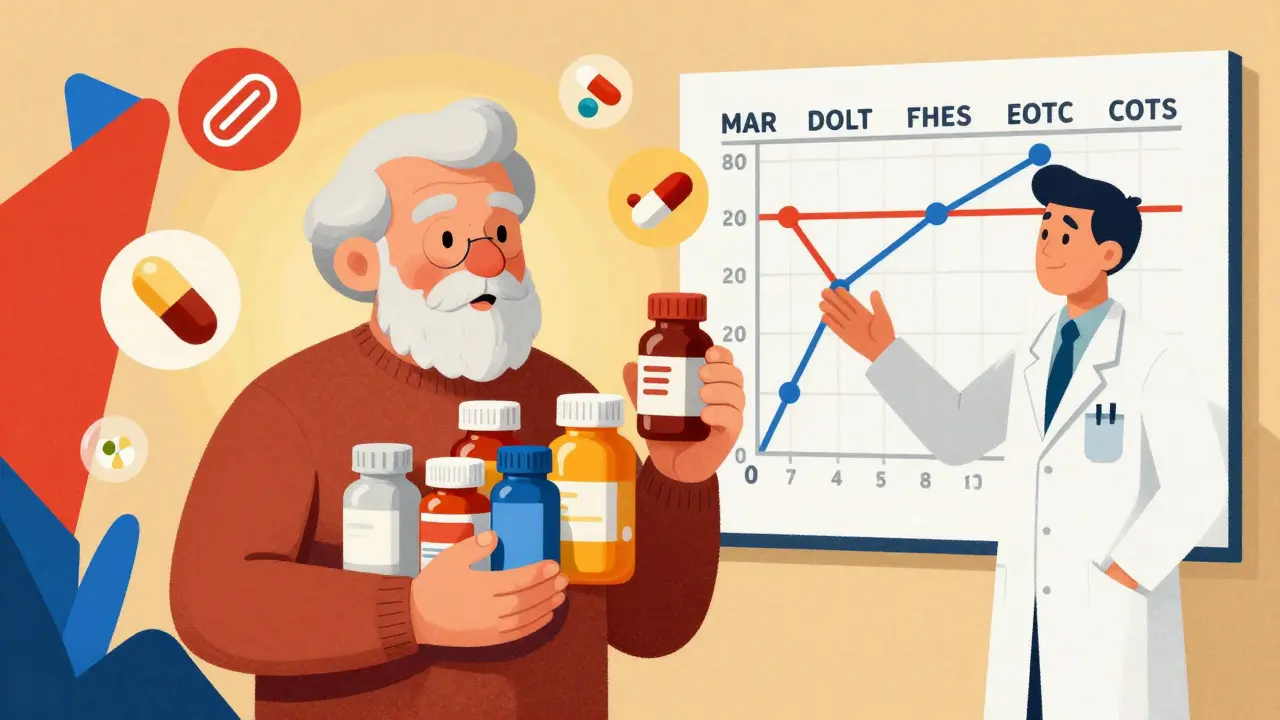
Certain medications commonly prescribed to seniors significantly increase fall risk. Learn which drugs are most dangerous, how polypharmacy compounds the danger, and what steps you can take to reduce fall risk through medication review and deprescribing.

Read Details

Bioequivalence of Combination Products: Special Testing Challenges Explained

Bioequivalence testing for combination products like FDCs, topical creams, and inhalers faces unique scientific and regulatory hurdles. Learn why these generics take longer to approve and what's being done to fix it.

Read Details

Antiplatelet Side Effects: Clopidogrel, Prasugrel, and Ticagrelor Compared

Clopidogrel, prasugrel, and ticagrelor are powerful antiplatelet drugs used after heart attacks or stents. Each has different side effects: bleeding risks, breathing trouble, and genetic factors that affect how well they work. Learn how they compare and what to watch for.

Read Details

Antibiotic Overuse: How Misuse Fuels Resistance and C. difficile Infections

Antibiotic overuse is driving deadly resistance and C. difficile infections. Learn how misuse fuels superbugs, why common infections are becoming untreatable, and what you can do to protect yourself and others.

Read Details

Extended-Release vs. Immediate-Release Medications: When Timing Matters for Safety and Effectiveness

Extended-release and immediate-release medications work differently-timing affects safety, effectiveness, and side effects. Learn when each type is right for you and how to avoid dangerous mistakes.

Read Details

Gabapentinoids in Pregnancy: What the Latest Safety Data Shows

Gabapentin and pregabalin are increasingly used in pregnancy for pain and seizures, but new research shows risks including heart defects, preterm birth, and NICU admissions. Learn what the latest data says about safety and what to do if you're taking these drugs.

Read Details

How to Address Allergies to Inactive Ingredients in Generics

Many generic medications contain hidden allergens like lactose, gluten, or dyes that aren't listed clearly on labels. Learn how to identify risky inactive ingredients, ask the right questions, and avoid allergic reactions - even when the active drug is the same.

Read Details